




Bathroom design has shifted. The old renovation formula of safe beige tiles, standard chrome fittings, and layouts that barely changed from one house to the next doesn’t carry much weight anymore. Homeowners want more from the room now; better storage, stronger materials, a clearer sense of calm, and a finish that feels considered rather than copied from a showroom template. That’s part of what sits behind many bathroom renovations in St Kilda and across Melbourne more broadly. People want bathrooms that work harder, look sharper, and still feel tied to the home around them.
The interesting part is that “updated” no longer means stripping all personality out of the space. Melbourne homeowners are moving towards bathrooms with more texture, more restraint, and more confidence in the details. The edge hasn’t disappeared; it’s just being expressed more carefully. Instead of chasing whatever looks newest, people are making rooms feel cleaner, quieter, and more liveable without flattening them into something generic.
The polished showroom look has lost some appeal
There was a stretch where a lot of bathrooms started looking interchangeable. Same stone top, same oversized mirror, same monochrome palette, same fittings, same visual language repeated regardless of house style. It photographed well, though plenty of those spaces felt anonymous once the novelty wore off.
Melbourne homeowners seem less interested in that now. They still want bathrooms to look refined, but they’re leaning more towards spaces with some identity. That might come through warmer tile choices, bolder joinery colours, brushed finishes, textured surfaces, or a layout that responds better to the shape of the room rather than forcing in the same standard arrangement.
The result usually feels more grounded. Less like a display suite, more like part of a real home.
Character matters, even in a smaller room
Bathrooms don’t have much space to hide behind. Every decision shows up quickly. That’s one reason bland renovation work stands out so much in them. If the room has no depth, no contrast, and no clear point of view, it starts feeling flat almost immediately.
Homeowners are responding to that by putting more thought into the layers that shape mood. Tile variation, lighting warmth, vanity design, metal finishes, and the balance between clean lines and softer elements all matter. In older Melbourne homes, there’s often an effort to make the bathroom sit more naturally with the broader house rather than reading like an abrupt stylistic detour.
That doesn’t mean forcing period detail into every renovation. It means paying attention to what kind of home the bathroom belongs to and making choices that feel coherent inside that setting.
Storage has become a design issue, not just a practical one
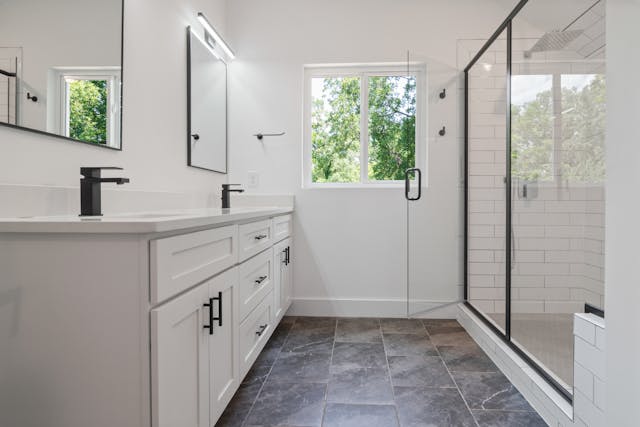
A bathroom can look impressive in the first week and become frustrating very quickly if storage hasn’t been handled properly. Bench clutter builds, drawers become awkward, and the whole room starts fighting the routines it’s meant to support.
That’s why better storage has become one of the key signs of a well-resolved renovation. Recessed shelving, integrated vanity storage, mirrored cabinetry, and more efficient use of vertical space all help the room stay cleaner and easier to use. The visual benefit is obvious, though the bigger gain is how much calmer the bathroom feels day to day.
A space with strong storage tends to hold its edge longer because it doesn’t collapse into mess the moment real life moves in.
Material choices are doing more of the work
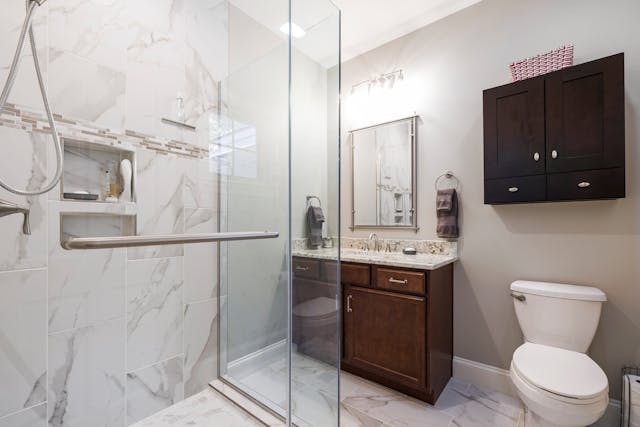
One of the clearest shifts in Melbourne bathrooms is the move away from sterile finishes and towards materials with more depth. Stone with variation, tiles that feel slightly handmade, timber accents, brushed brass, matte surfaces, and warmer neutrals all help soften the room without making it feel old-fashioned.
That’s a big part of why newer bathrooms still feel sharp. The edge comes less from stark contrast and more from confidence in texture, proportion, and finish. A room can feel modern without looking cold. It can feel restrained without becoming bland.
People are also thinking more about durability now. Bathrooms get used hard, so materials need to age well, clean well, and still look good after the first glossy stage wears off.
Layout changes often matter more than style changes
A lot of renovation attention goes to what the bathroom will look like. Fair enough. Still, the biggest improvement often comes from changing how the space works.
Poor circulation, awkward shower placement, weak storage, cramped vanities, and bad lighting can make even an expensive bathroom feel underdone. Melbourne homeowners are getting more conscious of that. They want layouts that create breathing room, make daily routines easier, and use the available footprint more intelligently.
Sometimes that means moving plumbing points. Sometimes it means sacrificing an oversized bath for a better shower zone. Sometimes it means reworking the vanity position or opening visual space with smarter glazing and lighting. Those decisions tend to outlast trend-based styling because they improve the room at a more fundamental level.
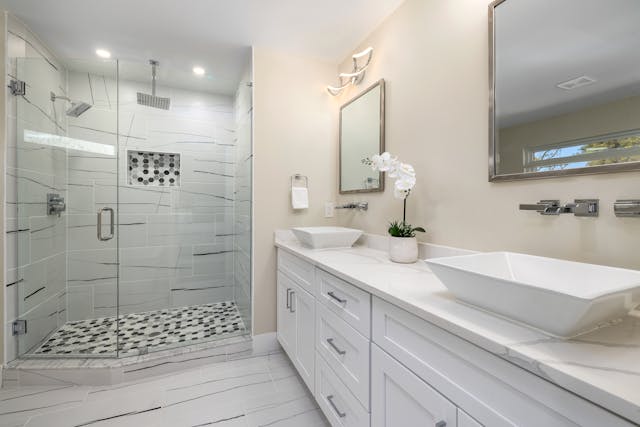
Bathrooms are getting calmer, not more boring
There’s a noticeable move towards bathrooms that feel calmer, though calm doesn’t have to mean timid. Stronger bathrooms now often rely on fewer visual interruptions, better lighting, tighter colour control, and more deliberate detailing. The room feels settled rather than loud.
That kind of restraint can still carry personality. Deep green joinery, textured stone, oversized tiles, sculptural basins, or a darker fitting palette can all bring edge into the room without making it chaotic. The difference lies in control. The space feels edited rather than overworked.
The best renovations still feel like they belong in Melbourne
Melbourne homes carry a certain mix of practicality and taste. People want things to function properly, though they also care how they feel to live with. Bathroom design seems to be following that same instinct. The strongest spaces aren’t the ones trying hardest to impress. They’re the ones that combine good planning, better materials, and a clearer sense of atmosphere.
That’s why so many current renovations feel sharper than the older “luxury bathroom” formula. They’re not trying to look expensive in a generic sense. They’re trying to feel right for the house, the people using it, and the way the room fits into everyday life.
A good bathroom should still have some attitude
Melbourne homeowners haven’t lost interest in style. They’ve just become more selective about where it comes from. Instead of relying on obvious trend markers, they’re building bathrooms with better bones, stronger material choices, and more confidence in the quieter details.
That usually leads to a better result. The room feels contemporary, though it doesn’t feel disposable. It feels polished, though it still has some individuality. Most importantly, it holds onto a bit of edge without sacrificing comfort or function to get there.
Tags:KS