






Grief doesn’t always arrive in the shape people expect. Sometimes it follows a death.Sometimes it shows up after divorce, estrangement, illness, miscarriage, infertility, trauma, losing a home, losing a role, or watching life shift into something unrecognisable. Many people still carry the impression that grief only counts when it fits a narrow, socially approved script. It doesn’t. In reality, all types of grief are valid and deserve compassionate care, even when the loss looks less visible from the outside.
Plenty of people end up minimising their own pain because they think someone else has it worse, or because the loss feels too complicated to explain neatly. A parent can grieve the adult child who’s still alive but no longer in contact. A person can grieve the future they expected to have. Someone living through chronic illness can grieve the version of themselves that once felt easier to inhabit. None of that becomes lesser grief simply because it makes other people uncomfortable.
Grief has a habit of ignoring neat categories
Loss rarely respects tidy definitions. One person may be grieving a partner who died after a long illness. Another may be grieving a relationship that ended without warning. Another may be grieving the life they thought parenthood would look like, or the way trauma altered their sense of safety. The source changes. The ache can feel just as real.
People often get into trouble when they start ranking grief as though pain needs to earn its legitimacy. Was it serious enough? Was the relationship close enough? Was the loss visible enough? Did other people witness it? Those questions usually make someone feel smaller, not clearer.
Unrecognised grief can feel especially lonely
Some losses attract casseroles, flowers, leave from work, and a language everybody recognises. Others get silence. A miscarriage may be kept private. A friendship breakdown may be dismissed as “one of those things”. Infertility can be lived through in a fog of appointments and polite conversations that barely touch the real heartbreak. Caregiving can involve grieving someone in stages while still showing up for them every day.
Grief in those situations often becomes quieter, though not lighter. In some ways it can feel harder because there’s so little permission around it. No obvious script. No public ritual. No shared map. Just a person carrying something heavy while the world keeps asking for normality.
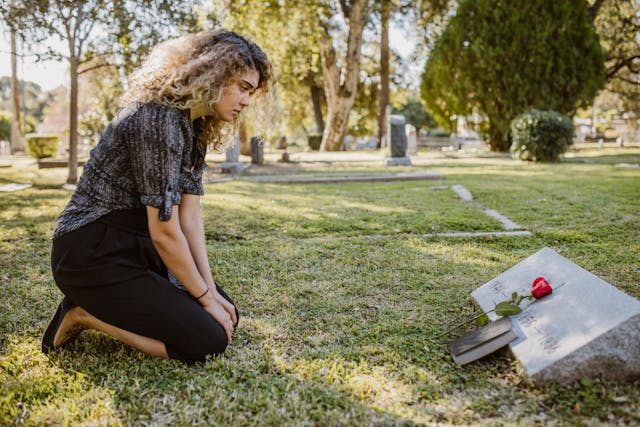
The body usually knows before the mind catches up
Grief isn’t only sadness. It can come out sideways. Exhaustion. Foggy concentration.Irritability. Numbness. Restlessness. Tightness in the chest. Sleep gone strange. Appetite all over the place. A short fuse in places that used to feel manageable.
Many people wonder what’s wrong with them because their grief doesn’t look poetic or dramatic. It looks like forgetting things, crying in the supermarket, going flat around friends, or feeling weirdly detached during ordinary conversations. Fairly common, actually. The body often starts carrying the loss before the person has found the words for it.
Complicated feelings don’t make grief less real
Not every loss involves pure love and clean memories. Sometimes grief comes mixed with anger, relief, guilt, resentment, confusion, or unfinished business. A difficult parent dies. A relationship ends after years of strain. Someone misses a person they also needed distance from. Those emotional mixtures can make people feel almost disloyal to their own pain.
No need. Grief doesn’t require saintly feelings to qualify. Human relationships are messy. Human losses are messy too. Missing someone and feeling angry with them can coexist.Relief and sorrow can sit in the same room. So can grief for what happened and grief for what never got the chance to happen.
Compassionate care makes room for the whole picture
Good support doesn’t force grief into a neat timeline or a polished story. It leaves room for contradiction, for numb stretches, for anger, for exhaustion, for the strange practical details people can feel ashamed to mention. Sometimes someone wants to talk about the loss itself. Sometimes they want to talk about how odd it feels to answer emails while their inner world has quietly fallen apart.
Compassionate care can help because it offers a place where the loss doesn’t need to be justified first. No audition. No pressure to present it in the “right” way. Just room to tell the truth about what hurts, what feels disorienting, and what has changed.
Grief doesn’t always move in a straight line
A lot of people expect grief to fade in a pleasing, orderly arc. Then six months later a song, a date, a smell, a school form, or a casual question from a stranger knocks the wind out of them and they assume they’ve gone backwards. More often, grief moves like weather. It shifts. It circles back. It changes texture.
Some periods feel survivable, then a small trigger opens the whole thing again.Anniversaries can do it. So can milestones, birthdays, empty routines, or moments when life keeps moving and the loss suddenly feels more final than it did before. None of that means someone is failing at grief. It means attachment leaves a mark.

People often need permission more than advice
Mourners get a lot of bad advice. Stay busy. Be strong. Everything happens for a reason. At least. Time heals. Most of it lands badly because grief usually doesn’t need a slogan. It needs space, patience, and a bit less pressure to tidy itself up for other people.
Often the most useful thing a grieving person hears is something much simpler: of course this hurts. Of course you’re tired. Of course it’s confusing. Of course you’re not handling every day gracefully. Those responses don’t fix the loss, though they stop adding shame on top of pain.
Care can help with more than the loss itself
Grief tends to spill into identity, relationships, work, and daily functioning. Someone may stop trusting their own memory. Their confidence may wobble. Their social life may shrink. Their body may feel unfamiliar. Their future may look different in ways they hadn’t prepared for.
Support can help a person make sense of all that, not by pushing them to “move on”, but by helping them live with the changed shape of things. Some losses stay tender for a long time.Some become part of the landscape forever. The goal isn’t always closure in the dramatic sense people talk about. Sometimes the work is gentler than that. Learning how to carry what happened without letting it swallow everything else.
No one should have to prove their grief before receiving care
Loss can be public or private, sudden or slow, socially recognised or almost invisible. Pain doesn’t become legitimate only when other people understand it quickly. A person grieving a death deserves care. So does the person grieving a future that disappeared, a relationship that fractured, a body that changed, or a life stage that ended before they were ready.
Compassion usually starts there. Believing the experience counts. Letting grief be real without forcing it into someone else’s template. For many people, that recognition is where healing begins.
Tags:KS