




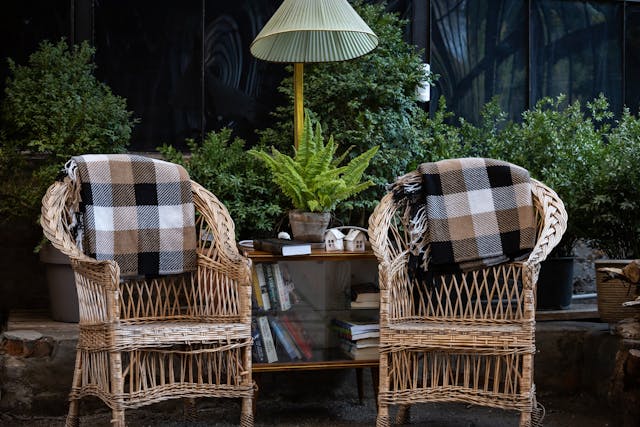
Wicker furniture still holds a top spot for Aussies in their outdoor living areas, great for lightness and looking good. However, it’s sadly not the most durable in the face of the harsh environment. It appears that messing up the maintenance can cut the lifespan in half. As a result, regular cleaning and TLC is crucial if you want to get the most bang for your buck and keep your outdoor furniture looking good for years to come.
Environmental Exposure & Wicker’s Hidden Weaknesses in Australia
Our Aussie backyard weather is not exactly kind to wicker furniture. Outside studies show our UV ray levels are 15 20% higher than most other places in the world, and that’s largely due to the Ozone layer thinning out and our location in the world. Because of this, the fake wicker bits tend to lose strength over time. They can weaken by up to 30 50% in just 2 3 years if you don’t do anything about it. Natural wicker, i.e. rattan or cane, soaks up water like a sponge. In coastal areas like Qld and NSW, the humidity makes the structures more likely to warp by almost 25%. That’s a pretty big risk. Scientists have also shown that every day in summer, the UV index in Australia is at its peak, often between 10 14. That’s off the charts in terms of environmental stress. So, if you don’t treat your wicker furniture, it’s going to start breaking down in no time. Surface cracks can appear in as little as 1 year. This means replacement cycles for protected outdoor furniture in Australia are only 3 5 years. By comparison, they’d last 6 8 years in places with milder climates. It’s no wonder that people’s buying and maintenance habits in the Aussie furniture market have been influenced by these harsh conditions. People replace untreated outdoor furniture every 3 5 years. Meanwhile, well maintained pieces can last 7 10 years.
Dust Accumulation & Outdoor Contamination Rates
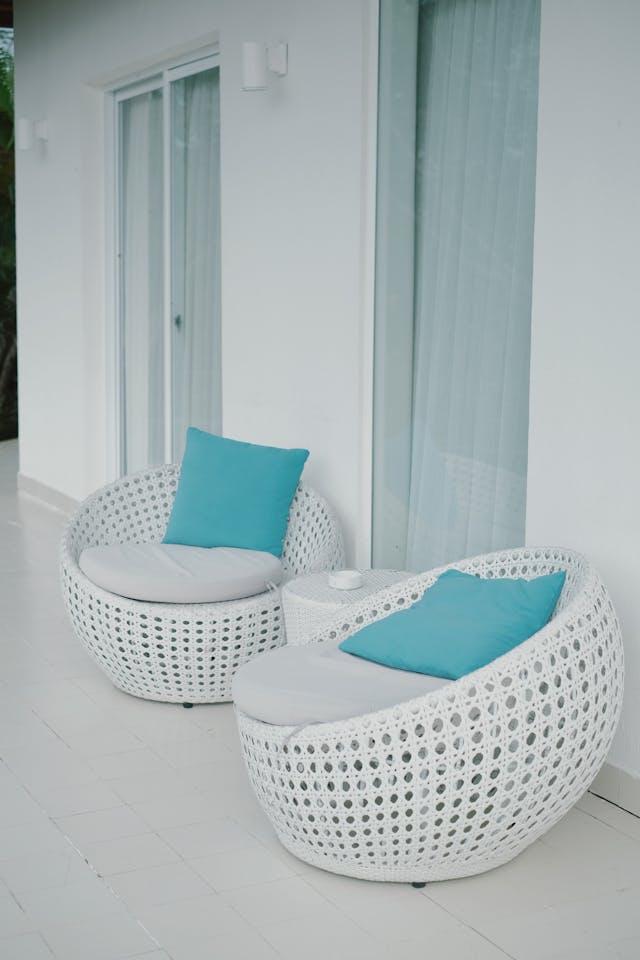
Outdoor furniture in Australia has got it tough when it comes to dust, dry soil and bushfires don’t help. Reports show that in dry months the dust builds up on surfaces at the rate of 1.5 3.0 grams per square metre per week. For wicker, the woven design makes it even worse. It’s got a 35% higher dust retention rate than flat materials like aluminium or plastic. When it comes to outdoor furniture patio sets wicker residential areas, studies found that 70% of users report it looking grimy within 6 9 months if it doesn’t get a regular clean. And it’s not just about looks. It’s also about the tiny dust particles causing wear and tear on the fibres. Extended studies on households in urban Australia show that properties near major roads have a 25% higher dust build-up rate than areas further away. This means that if you’ve got wicker furniture in a high traffic area, you’re going to need to clean it every 10 14 days to keep it looking good. By contrast, cleaning every 3 4 weeks is usually enough in lower exposure areas.
Cleaning Methods and Efficiency Comparisons
Studies looking at the cleaning efficiency of woven outdoor materials have shown some pretty big differences between dry brushing, vacuum extraction and good old detergent washing. Dry brushing can remove about 40 55% of the dust on the surface. Still, it’s not much use if you’re trying to get rid of stuff that’s actually stuck in there. Vacuum extraction with the right attachment does a lot better, getting out around 75 85% of the dirt and dust. This works especially well on synthetic wicker, where the fibres are stiff enough to let you get at the deeper stuff. Using a mild detergent and some pH neutral solution does a pretty good job of getting rid of surface dirt and grime. Around 95% of the stuff on the surface is gone. But, do be aware that if you don’t dry it properly, you can end up with an increased chance of mould forming. In Australia, especially in the coastal areas of New South Wales where the humidity can be pretty high, mould can start growing if the furniture stays damp after washing. One trial that was set up in an outdoor environment for a long time showed that if you vacuum it first and then give it a wash every 3 months, the wicker degrades a whole lot slower than if you just stick to one method. At the same time, failing to dry the thing properly after washing, i.e. more than 24 hours in the shade, can increase the chance of fungus growing on the wicker. In one trial, they found fungal colonisation in as many as 18% of the samples they looked at.
Tags:KS